


Introduction
A beautiful garden can quickly turn into a mess once a dog enters the picture. Dug-up soil, trampled plants, and chewed leaves are all part of natural dog behavior—not bad behavior.
The key isn’t stopping your dog completely. It’s designing your garden in a way that works with them, not against them. When your space is planned properly, you protect your plants while still giving your dog freedom to move and explore comfortably.
1. Defined Pathways That Guide Movement

Dogs tend to follow the same routes again and again. Creating clear pathways using gravel, stepping stones, or compact soil helps guide their movement.
This reduces random running through plants and keeps the rest of your garden intact. Over time, your dog naturally sticks to these paths.
2. Raised Garden Beds That Stay Protected
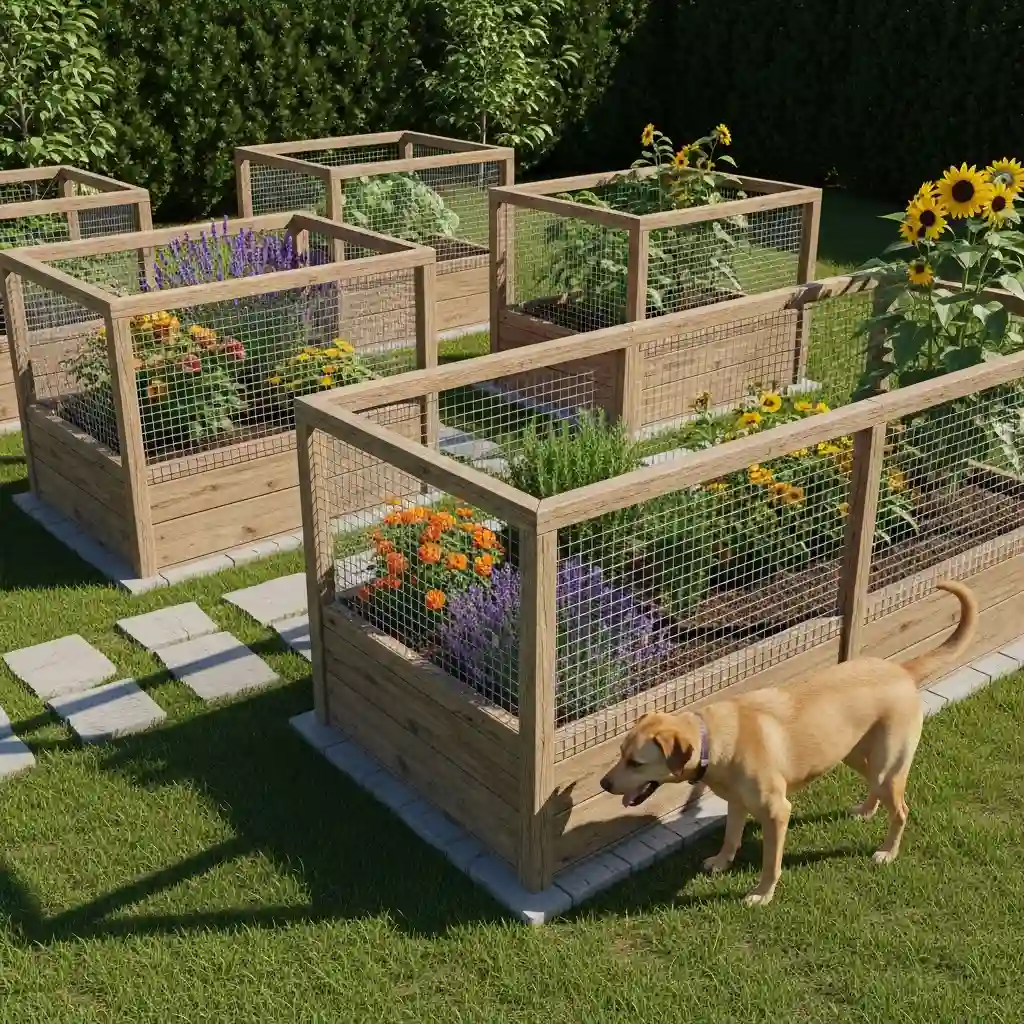
Lifting plants above ground level keeps them out of easy reach. Raised beds act as a simple barrier without needing extra fencing.
They also make your garden look more structured while protecting delicate plants from damage.
3. Designated Digging Zone That Saves Your Plants

Dogs dig—it’s instinct. Instead of fighting it, create a small digging area filled with loose soil or sand.
This redirects their behavior away from your garden beds. Once they learn where digging is allowed, your plants stay safe.
4. Durable Ground Cover That Handles Activity

Replacing delicate grass with stronger ground cover helps your yard handle daily activity better.
This reduces wear and tear while keeping the space looking clean and maintained.
5. Strategic Fencing That Feels Natural

Instead of blocking off everything, use subtle fencing around sensitive areas. This protects plants without making the garden feel closed off.
A light, natural-looking barrier works better than a harsh, obvious one.
6. Shaded Rest Area Away from Plants

Dogs often lie down in cool, comfortable spots—even if it means crushing plants. Creating a shaded resting area gives them a better option.
This naturally pulls them away from garden beds and protects your greenery.
7. Clear Boundaries That Are Easy to Understand

Keeping your layout simple helps your dog understand where they can and can’t go.
Consistent boundaries reduce confusion and make behavior easier to manage over time.
8. Balanced Layout That Works for Both

A garden that works well with a dog isn’t overcrowded. It has open space, defined areas, and room to move.
When everything is balanced, your dog enjoys the space—and your garden stays intact.
Styling Tips
Design your garden around your dog’s behavior, not against it.
Keep the layout simple so it’s easy for both you and your dog to navigate.
Use materials that are durable and easy to maintain over time.
Final Thoughts
A dog-proof garden isn’t about restriction—it’s about smart design. When you give your dog space to move and clear areas to explore, they’re less likely to damage what you’ve built.
With a few thoughtful changes, your garden can stay beautiful while still being a place your dog truly enjoys.
