


Introduction
Raising chickens at home doesn’t need to feel complicated or overwhelming. Most beginners struggle not because it’s hard, but because they try to build something too complex from the start.
A good setup is simple, safe, and easy to manage every day. When your space is organized and your routine feels natural, everything becomes easier. These ideas focus on practical setups that work in real homes without requiring too much time, money, or effort.
1. Basic Coop and Small Run Setup

Starting with a simple coop and a small attached run is one of the easiest ways to begin. It gives your chickens a place to rest while still allowing them space to move around safely.
This setup keeps everything contained and easy to manage. It’s ideal if you want something straightforward that covers all the essentials without overthinking it.
2. Backyard Corner Setup That Saves Space

Using a corner of your yard makes setup quicker and more efficient. You only need to build part of the structure since the boundaries are already there.
This approach helps you use space wisely while keeping the layout clean. It feels more integrated into your backyard instead of looking separate.
3. Portable Setup That Moves with Your Yard

A movable setup allows you to shift your chickens to different areas over time. This helps keep the ground healthier and reduces buildup in one spot.
It also gives your chickens access to fresh space regularly. This flexibility makes daily care easier and more manageable.
4. Raised Coop Setup That Stays Clean

A raised coop keeps the sleeping area off the ground, which helps reduce moisture and dirt. This makes cleaning easier and improves overall hygiene.
It also creates a more organized look. Even a small lift can make the entire setup feel more structured.
5. Compact Setup for Small Backyards

If space is limited, a compact design keeps everything close without feeling crowded. A smaller footprint can still work well when the layout is efficient.
This setup focuses on using space wisely instead of trying to expand it. It’s perfect for urban or tighter backyard environments.
6. Combined Coop and Run for Simplicity

Keeping the coop and run together in one structure reduces the need for extra sections. Everything stays in one place, making daily care easier.
This setup works well for beginners who want a simple routine. Less movement means less effort over time.
7. Open Run Setup for Better Airflow
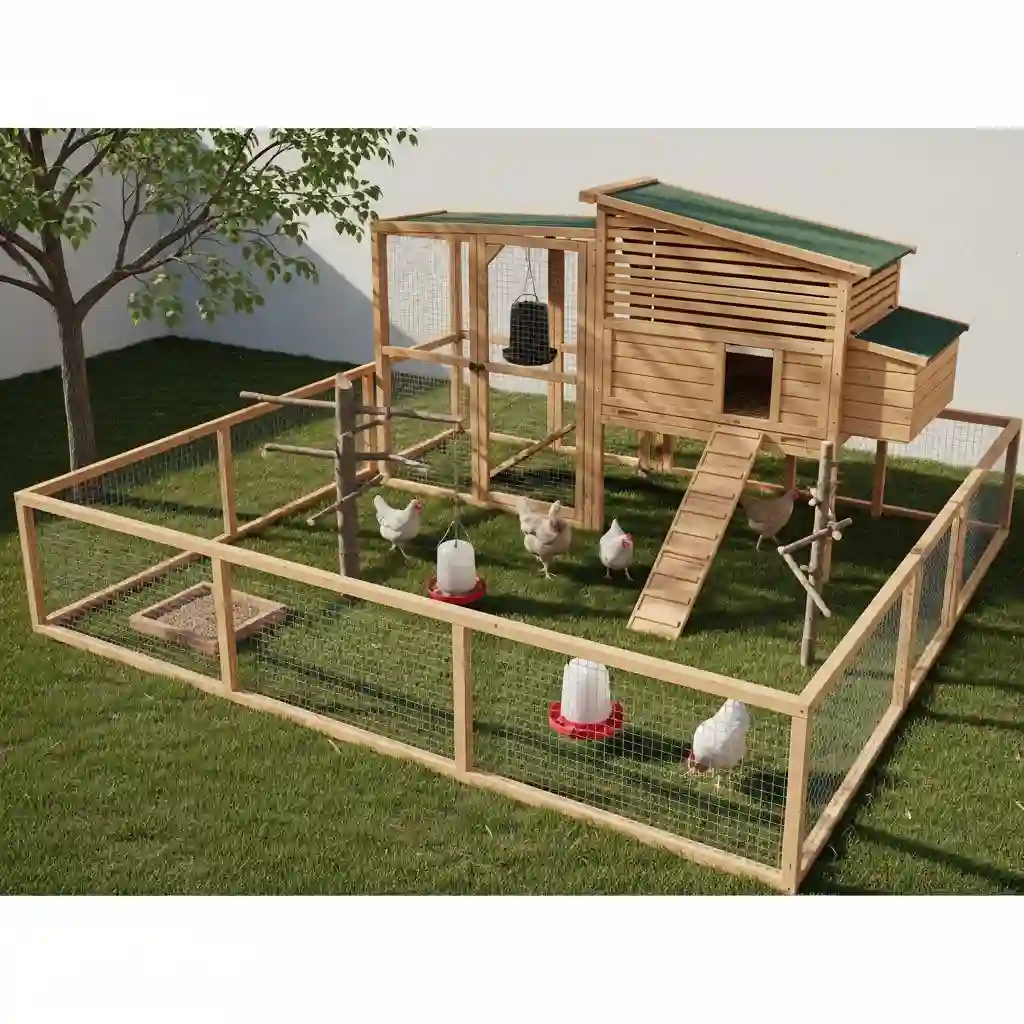
An open run design improves airflow and makes the space feel less confined. It also allows you to see everything clearly at a glance.
This helps you monitor your chickens easily while keeping the setup light and manageable.
8. Minimal Setup That Focuses on Essentials

A minimal setup focuses only on what’s necessary safe shelter, secure space, and easy access to food and water.
This keeps things simple and avoids unnecessary complications. It’s often the best approach when you’re just getting started.
Styling Tips
Keep your setup clean and organized so it’s easy to maintain every day. A tidy space always works better.
Use materials that fit naturally into your backyard so everything feels connected.
Focus on access and convenience. If daily tasks are easy, the entire experience becomes more enjoyable.
Final Thoughts
Raising chickens at home becomes much easier when your setup is simple and practical. You don’t need a perfect design you need one that works for your space and routine.
Start small, learn as you go, and adjust over time. The best setups are the ones that grow naturally with your experience.
