


Introduction
Building a chicken pen doesn’t have to be expensive or complicated. In fact, some of the best setups come from using what you already have and keeping things simple.
A good pen is really about three things—safety, space, and easy maintenance. When those are in place, the rest can stay minimal. These ideas focus on low-cost setups that still look clean, work well, and feel practical for everyday use.
1. Pallet Fence Pen That Uses Free Materials

Wood pallets are one of the easiest ways to build a pen without spending much. They’re often available for free and already come in a usable shape.
Stand them upright and secure them together to form a simple enclosure. It creates a sturdy structure while keeping the look natural and rustic.
2. Simple Wire Pen with Wooden Stakes

Using basic wire mesh with wooden stakes is one of the quickest and cheapest ways to build a pen.
Push the stakes into the ground and attach the wire around them. It’s lightweight, easy to adjust, and works well for small backyard setups.
Recommended Product: chicken wire mesh roll
3. Reused Old Furniture Frame Pen

Old bed frames, tables, or wooden frames can be repurposed into a chicken pen.
Instead of throwing them away, use them as the base structure and attach wire or netting. This saves money and gives materials a second life.
4. DIY Hoop Pen Using Flexible Pipes

Flexible pipes or rods can be bent into a hoop shape and covered with netting or wire.
This creates a simple, lightweight pen that’s easy to move. It’s especially useful if you want to shift the pen around your yard
Recommended Product: chicken fencing wire
5. Garden Fence Extension Pen

If you already have a garden fence, extend it slightly to create a chicken area.
This reduces the amount of material you need and keeps the setup simple. It also blends naturally with your yard.
6. Compact Corner Pen That Saves Space
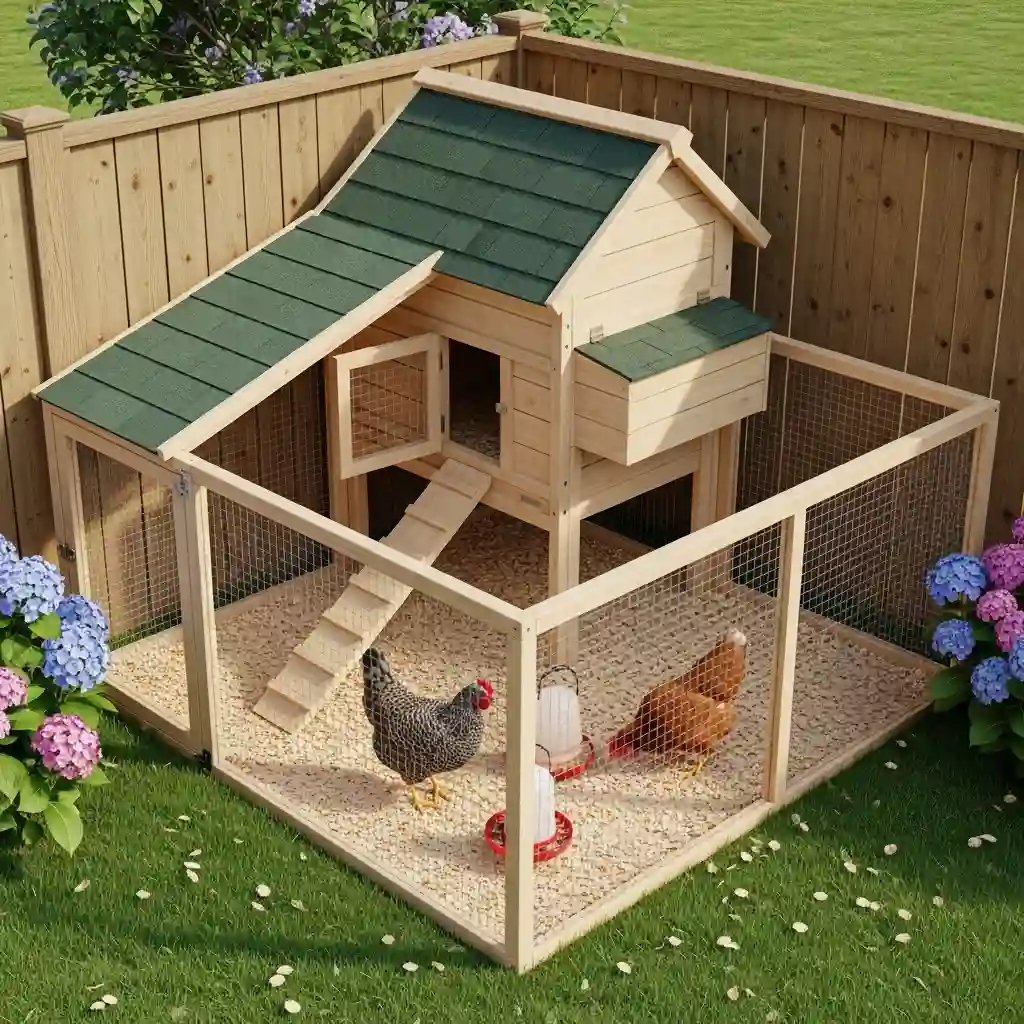
Using a corner of your yard means you only need to build two sides instead of four.
This cuts costs and makes the pen feel more structured. It’s a smart way to use space efficiently.
7. Basic Netting Pen for Temporary Use

For a quick and low-cost option, lightweight netting can be used to create a temporary pen.
It’s easy to set up and move, making it useful for short-term use or rotating areas.
Styling Tips
Keep the layout simple and easy to clean. A clear setup always looks better, even with basic materials.
Use natural materials when possible so the pen blends into your backyard.
Focus on function first—good design naturally follows when everything works well.
Final Thoughts
A chicken pen doesn’t need to cost a lot to work well. With a bit of creativity and simple materials, you can build something that’s both practical and visually clean.
Start with what you already have, keep the design simple, and improve it over time. That’s often how the best setups come together.
