


Introduction
Many people assume a chicken pen has to be complicated to work well. In reality, the simplest setups are often the easiest to maintain and the most reliable over time.
A good chicken pen doesn’t need fancy materials or complex design. It needs clear structure, easy access, and enough space for your chickens to move comfortably. These ideas focus on practical setups that look clean, work efficiently, and don’t require overthinking.
1. Basic Frame Pen That Covers the Essentials

A simple rectangular frame with mesh around it is one of the easiest pens you can build. It gives your chickens a safe boundary without adding unnecessary complexity.
Because the structure is straightforward, it’s easy to repair or adjust later. This makes it perfect for beginners who want something reliable and low-stress.
2. Corner Pen That Cuts Down the Work

Using a corner of your yard means two sides are already in place. You only need to build the remaining structure, which saves both time and effort.
This setup also feels more natural in your yard. It blends into the space instead of looking like something added on.
3. Pallet Pen That Uses What You Already Have

Wood pallets are widely available and easy to work with. They can be arranged to form a sturdy enclosure without much cutting or measuring.
This approach keeps costs low while still giving you a functional and solid pen. It’s a practical solution that doesn’t require advanced tools.
4. Wire Mesh Pen That Builds Quickly

Using mesh with simple supports creates a pen in a short amount of time. It’s one of the fastest ways to get started.
This design is lightweight and easy to adjust if needed. It works well when you want something simple but effective.
5. Portable Pen That Moves When Needed
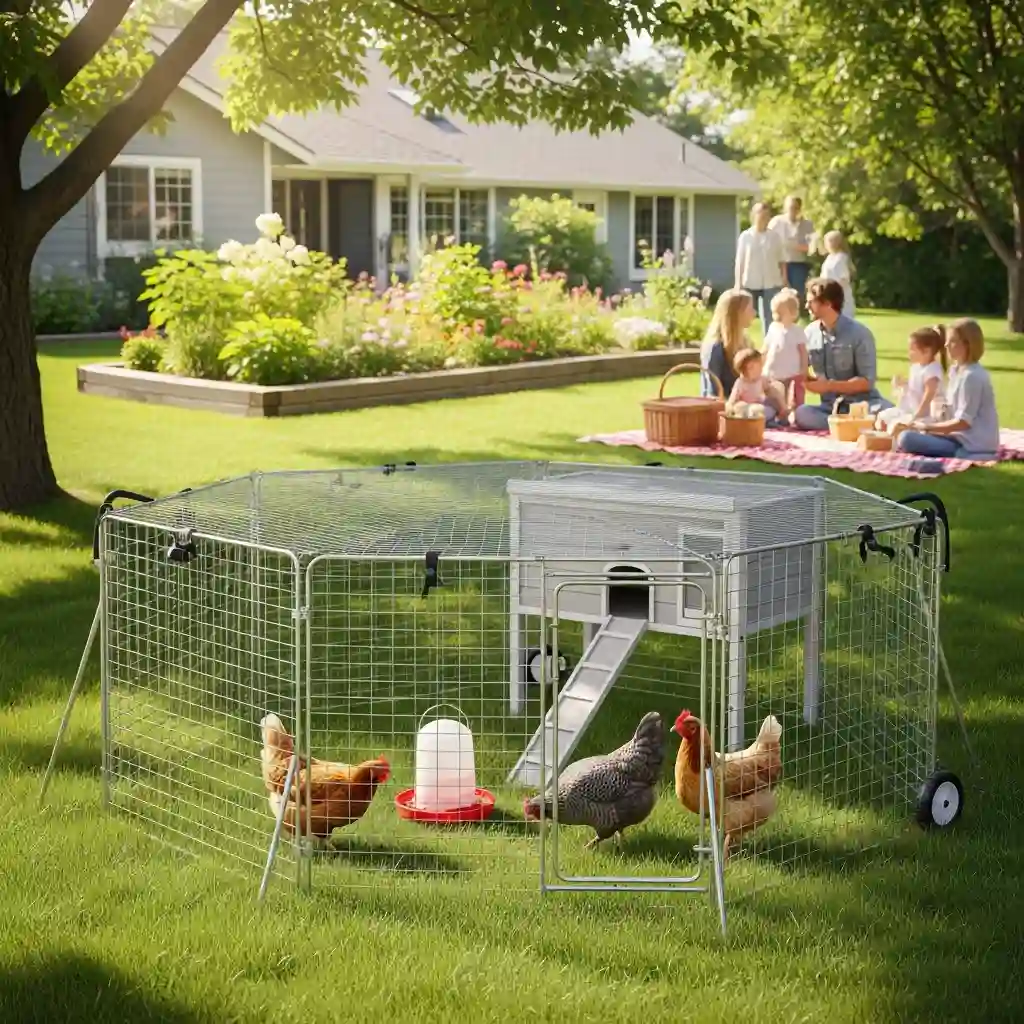
A movable pen allows you to shift your chickens to fresh ground. This keeps the area cleaner and prevents one spot from wearing out.
It also gives you flexibility. You can change the layout of your yard without being tied to one permanent setup.
6. Raised Pen That Keeps Things Dry

Lifting the pen slightly off the ground helps reduce moisture and mud. This makes cleaning easier and keeps the area more comfortable.
It also improves airflow, which helps maintain a cleaner environment overall.
7. Narrow Pen That Fits Small Spaces

A long, narrow pen works well in side yards or tight areas. It uses space that might otherwise go unused.
Even though it’s compact, it still allows chickens to move freely along the length of the pen.
8. Covered Pen That Adds Simple Protection

Adding a basic cover provides protection without making the structure complicated. It helps keep the space more controlled.
This small addition can make a big difference in how the pen functions day to day.
9. Open Design Pen That Feels Less Confined

An open structure with good visibility keeps the pen from feeling closed in. It allows air to move freely and keeps things light.
This also makes it easier to monitor your chickens without stepping inside constantly.
10. Combined Coop and Pen Setup

Combining the coop and pen into one structure simplifies your entire setup. Everything stays in one place, making daily care easier.
This reduces movement and keeps your routine more efficient.
11. Minimal Layout That Stays Easy to Maintain

A clean, simple layout is often the best choice. When everything has a clear place, the pen is easier to manage.
Avoid adding unnecessary sections. Simplicity keeps the setup practical and stress-free.
Styling Tips
Keep your design simple and avoid overbuilding. A clear layout works better than a complicated one.
Use materials that blend naturally with your backyard so the pen feels part of the space.
Make sure everything is easy to access. Convenience is what makes a setup truly effective.
Final Thoughts
A chicken pen doesn’t need to be complex to work well. In fact, the simplest designs are often the most reliable and easiest to maintain.
When you focus on function, clarity, and ease of use, your setup naturally becomes more practical and enjoyable to manage.
